Perhaps your schedule in life events today is, as for many, atop the knife’s edge between holidays commemorating sun cycles/resisitant Maccabis/reaffirming African heritage/etc. and advent of another year in the Julian Calendar. If so, what a perfect restful opportunity to spend the day perusing all 259 pages of the draft “Transitions 2045 Metropolitan Transporation Plan” (MTP 2045) put togther by our Mid-Region Council of Governments.
Not only does MTP 2045 offer mind-numbing uber-relaxing hours of leisure diving into its 100 or so graphs/tables, the doc’s draft status means there’s also your chance to email comments on the Plan by January 10th.
What is MTP 2045 and why should you bother perusing/commenting?
The short answer is that you’ve raised a very interesting question. Perhaps more interesting than the MTP 2045 itself, which admittedly is not exactly John le Carré in terms of prose or plot structure:
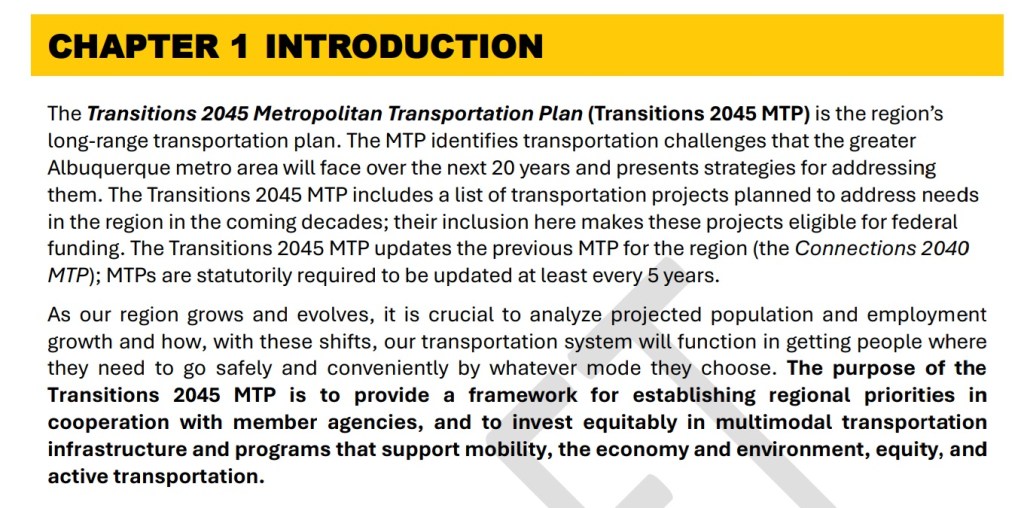
Nevertheless, despite the wordy bureaucratese in its introduction and throughout, the Plan is important as a singular area-wide transpo guiding document for all the many jurisdictions within the MRMPO (Mid-Region Metropolitan Planning Organization). So many acronyms…
Maybe it will help if your humble blogger takes a crack at the draft Plan introduction excerpt above and relates what this doc is really all about via three questions:
- How many people will live here by 2045?
- In what part of the area will they live and work?
- How will they get around?
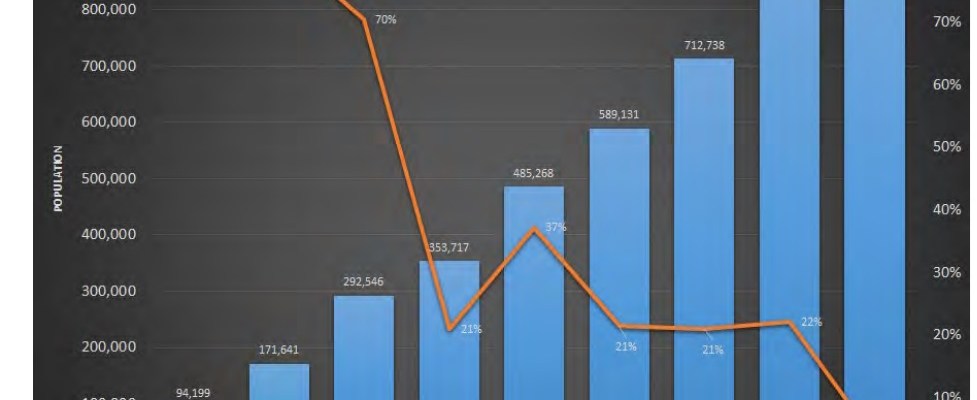
From a forecasting perspective, recent five-year iterations of the predominanty population-rosy Plan have been very, very wrong in answering these questions. For instance, about one-third of the 2045 version is spent documenting how Covid-19 decimated the forecasting in MTP 2040. Before that, the Great Recession and other factors initiated a flattening of population growth as shown here in MTP 2045:

So until roughly the Great Recession of 2008, our population growth had been around 20% or greater for decades. Since then, it’s flattened. The draft Plan quits betting on ~20% growth and significantly adjusts its expected 2045 population downward from those recent forecasts/plans.

The draft Plan’s transportation forecasts and recommendations are centered upon this continued population growth slowdown, and those of you who have read this far into this blogpost are probably also excellent candidates to dig through the entire draft to discover what those forecasts and recommendations are.
I’d hate to spoil your perusal, so no further plot spoilers from me. At least not in this blogpost. Happy holiday perusing; remember that comment submission deadline of January 10, 2025.
 Better Burque