A cycling (or walking) low-stress essential is developing an eagle eye for yellow. Over time, this evolving ability enables one to easily spot at 12-15 mph even somewhat hidden yellow like that above just off the multi-use path along Unser SW. Yes, it’s our low-stress friend, The Bollard.
Gaps such as that above very often aren’t important enough to map (cuz maps are all about drivers); hence, developing the bollard eagle eye is a formidable skill in avoiding stress and getting to residential streets and other low-stress options where one can ride/walk in relative quiet safety. There’s also the extremely great importance of bollards in thwarting drivers, an importance visually stressed by the wonderful “World Bollard Association” and its social media feed:
— World Bollard Association™ (@WorldBollard) July 30, 2023
Below is a smorgasboard of BB photos over recent years illustrating the importance of bollards and related roadway infrastructure in keeping riders/walkers free from stress and away from you know who.
Central Ave. at Buena Vista. This famed “notch” to get to/from UNM has prevented countless drivers from making a U-ie or god knows what dumb-ass decision because, that’s what drivers do.
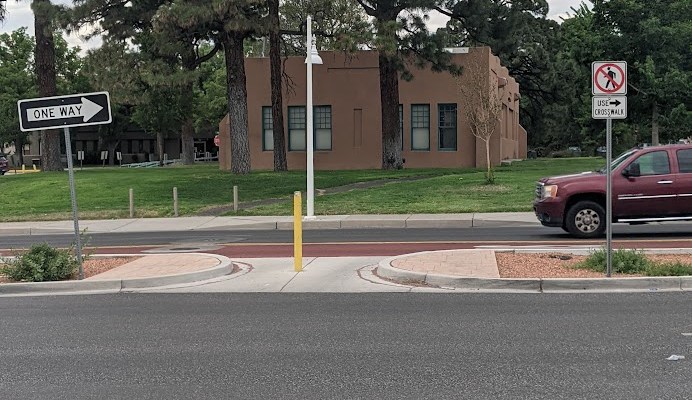
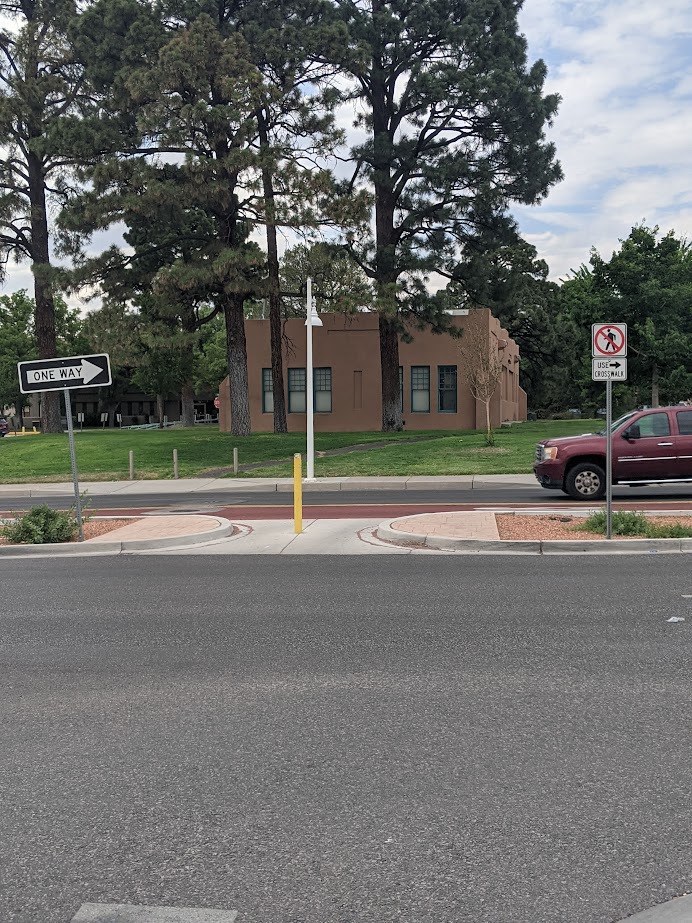
Speaking of UNM, these yellow warriors show battle scars in keeping drivers from visiting The Duck Pond in SUVs, etc.
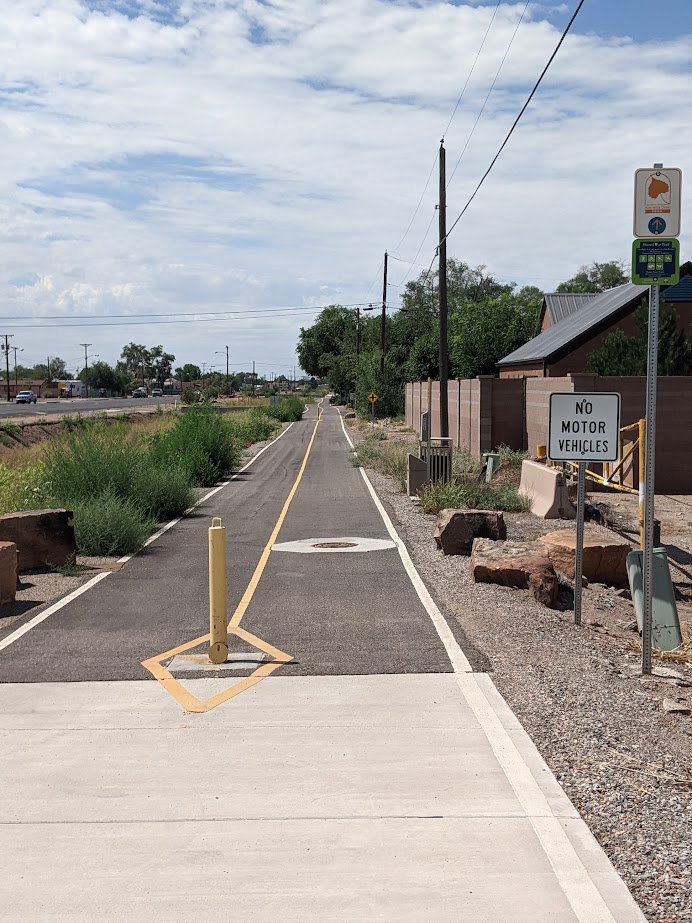
Pristine as a new baby’s behind, here’s the view down a brand-new stretch of Alameda Rail Trail. Remember: No Motor Vehicles
Newly driving high school students require understanding that they can’t take their car directly to class.
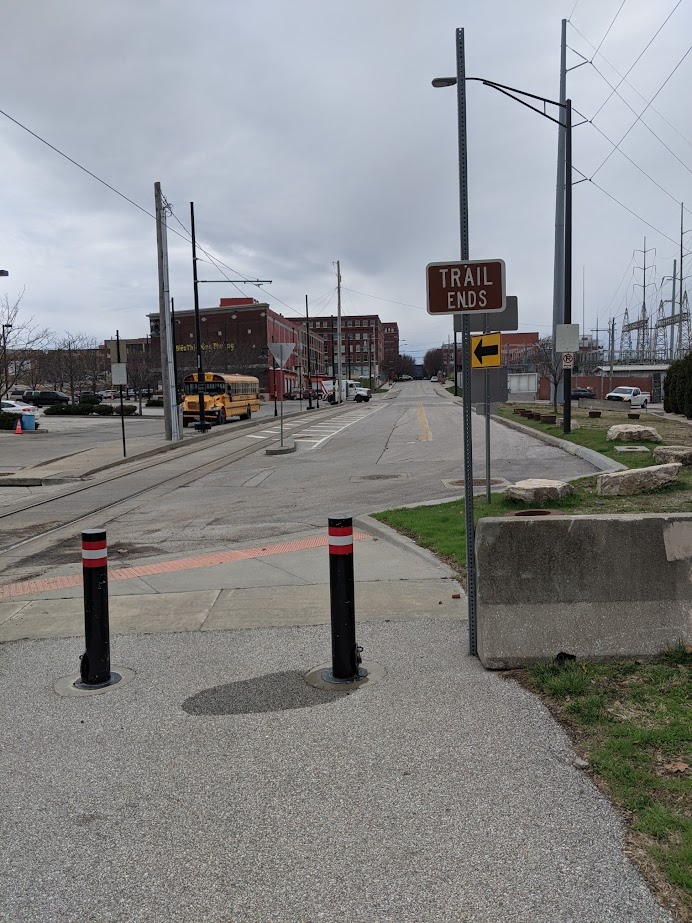
Bollards aren’t always yellow. These sentinels in Kansas City do have nice reflective strips in a downtown spot with significant night-time cycling/walking.
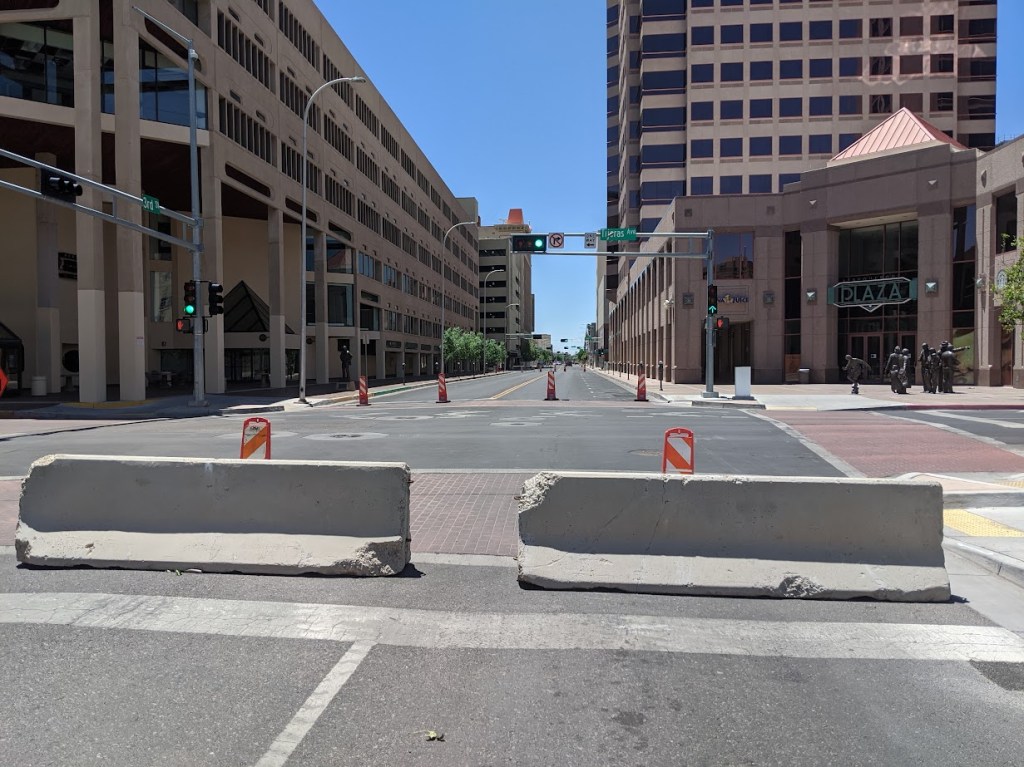
And not all bollards are skinny and round, or even bollards. The bollard’s chunky relative, the Jersey Barrier, provides a delicious maximally broad level of driver stopping power with delightful cycle/walker-wide gaps for “us.” Btw, this photo was taken mid-pandemic when everything was closed, nobody went anywhere, and streets were “closed” for assorted reasons or no reason at all.
These bollard-yellow Jersey Barriers highlight another huge benefit to cyclists/walkers: The stroad may be closed (in this case usually busy, busy Rio Bravo Blvd.), but it ain’t closed to “us”! It’s great to be free to ride places where one would normally be killed within 2-3 seconds.
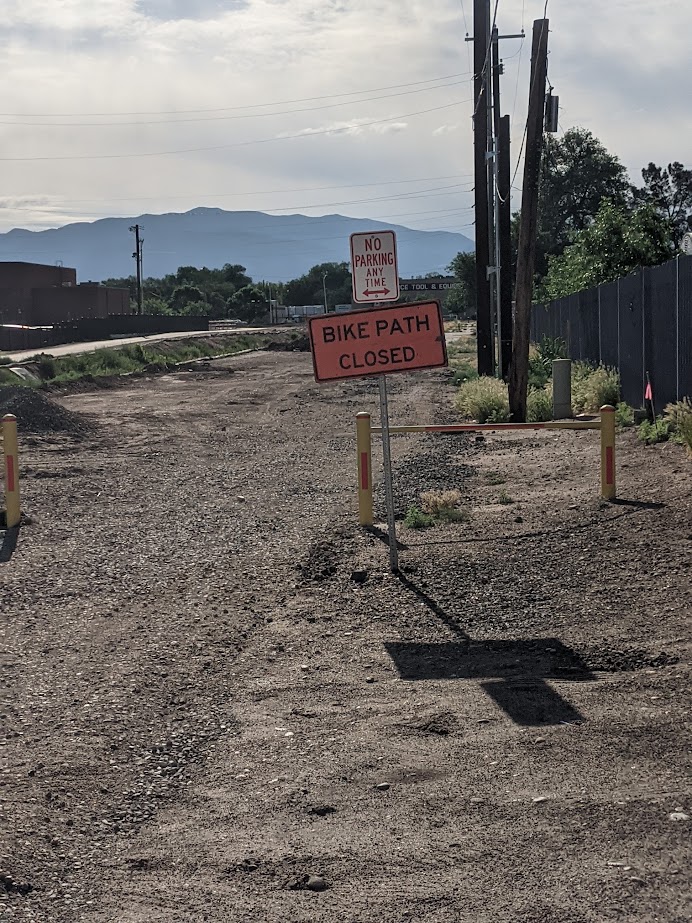
This “closure” concept extends even to cases where “the gummint” is telling us we can’t go. Here, we’re told the bike path is “closed,” but it’s not. Because we can still ride/walk the gravel, etc., and, besides, there are friendly bollards beckoning us through the gap.
Another relative of the standard bollard, the aesthetic, yet utilitarian (you can sit on it) bollard along with ubiqitous and nearly always useless “Sidewalk Closed” sign. Yes, the sidewalk is “closed” because they’re tearing down the old jail Downtown, but it’s not really closed because you can just walk/roll around the useless sign because the destruction is fenced off from the sidewalk.
The “gummint” dynamic is complicated by infrastructure leading to de facto walker/roller bollards that violate the Americans with Disabilities Act, etc. Here at what I believe is Constitution and San Pedro NE, we are basically being told we can’t walk/roll here even though it’s also apparently a “School Crossing.”
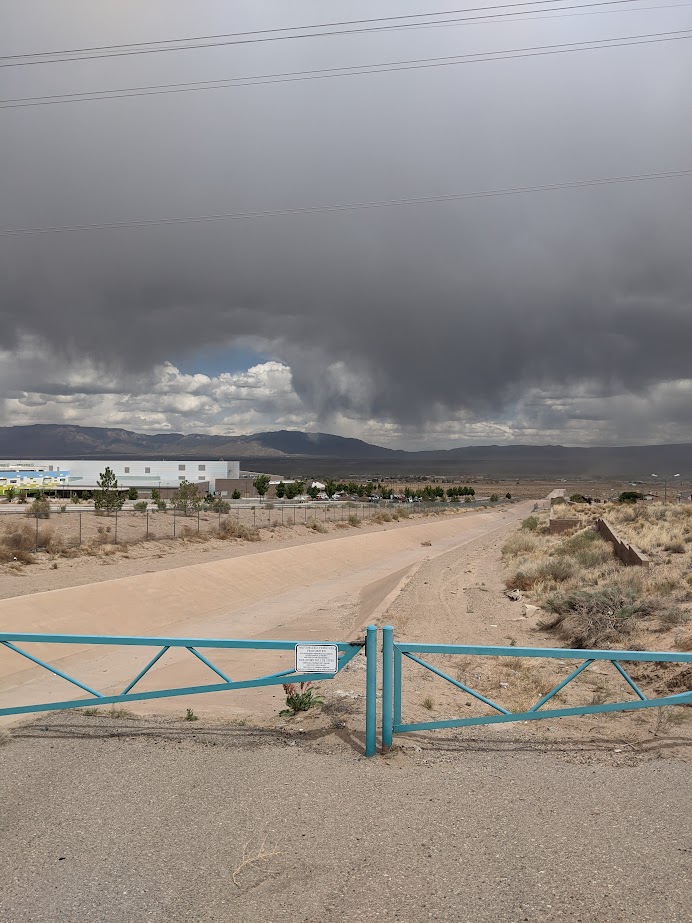
In further honing our bollard-eye, we also evolve the ability to quickly spot AMAFCA turquoise. Seeing this distinctive color gets us to very interesting off-the-driver path cycling/walking options such as this one off 118th St. near George I. Sanchez K-8 on the far, far SW Mesa.
As the community and its gummint entities seek to develop a low-stress cycling network, the importance of bollards and their driver-thwarting relatives in designing such a network will be huge. While focus has been and overwhelmingly will continue to be all about shared driver/walker/roller infrastructure such as bike lanes, greater focus on driver-thwarting infrastructure is needed, particularly as we are very, very, very unlikely to see sufficiently extensive driver-thwarting “protection” along our bike lanes/sidewalks and other driver-shared facilities.






 Better Burque